
Imagine you’re driving home after a long day. You’re thinking about dinner, your favorite TV show, and then—bam!
A car accident disrupts everything. Beyond the immediate shock and concern for everyone’s safety, a pressing question arises: who covers the medical bills? This worry can linger, causing stress and uncertainty. But you’re not alone in this situation. Understanding the nuances of car accident medical bills can feel like a maze.
Yet, navigating this maze is crucial for your peace of mind and financial security. You’ll uncover the key players involved in covering medical expenses after a car accident. You’ll gain insights that empower you to tackle this issue head-on, ensuring you’re prepared and protected. Don’t let confusion hold you back. Dive in, and discover the clarity you deserve.
Liability In Car Accidents
Understanding who pays medical bills after a car accident is crucial. Liability determines who is responsible for covering these expenses. It’s essential to grasp how fault affects payment, as systems vary by state.
Fault-based Systems
In fault-based systems, the driver causing the accident is liable. This driver must cover medical costs for injuries. Victims can seek compensation through the driver’s insurance. They may also pursue legal action for further damages.
No-fault Systems
No-fault systems operate differently, prioritizing swift payments. Each party’s insurance covers their own medical expenses. There’s no need to prove fault for compensation. These systems aim to reduce legal disputes and ensure quick recovery.
Role Of Auto Insurance
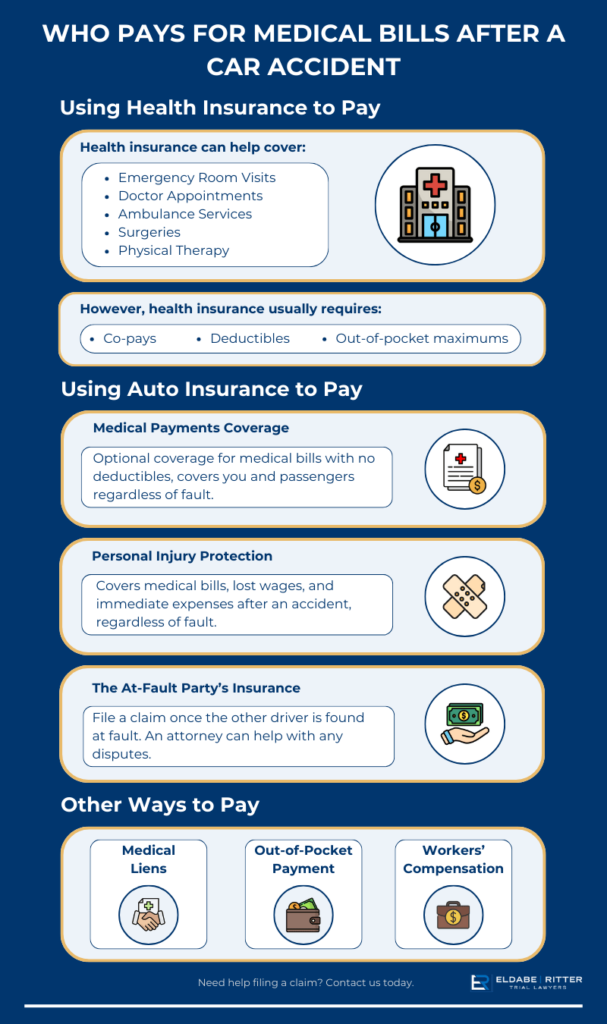
Auto insurance plays a crucial role in covering medical bills after a car accident. It can help pay for hospital expenses, doctor visits, and rehabilitation costs, easing the financial burden on those involved. Understanding your policy is essential to ensure adequate coverage and peace of mind.
Auto insurance plays a crucial role in covering medical bills after a car accident. Understanding how different types of coverage work can save you from unexpected financial burdens. Let’s delve into the specifics of each coverage type and how they can protect you when you need it most.Personal Injury Protection
Personal Injury Protection (PIP) is a valuable feature in your auto insurance policy. It covers medical expenses regardless of who is at fault. Imagine the peace of mind knowing that your medical bills are taken care of without the hassle of proving fault. PIP can also cover additional expenses like lost wages or rehabilitation costs. This type of coverage is mandatory in some states, but optional in others. It’s worth checking if it’s included in your policy or if you should add it.Medical Payments Coverage
Medical Payments Coverage, often called MedPay, is another layer of protection. It covers medical expenses for you and your passengers after an accident. Unlike PIP, MedPay doesn’t cover lost wages but focuses solely on medical bills. Have you ever wondered how you’d manage immediate medical expenses? MedPay can be a lifesaver, ensuring those costs don’t come out of your pocket. It’s typically an optional coverage, but adding it can provide extra security.Liability Coverage
Liability Coverage is essential when you’re at fault in an accident. It covers the other party’s medical expenses and damages. This coverage ensures you don’t personally bear the financial burden of paying for someone else’s medical bills. Think about the implications of being underinsured. Without sufficient liability coverage, you could face lawsuits or financial ruin. Always ensure your policy limits are adequate to cover potential accidents. In the end, understanding your auto insurance policy is key to avoiding surprise expenses. Have you reviewed your coverage lately? It might be time to check in with your insurer and ensure you have the protection you need.Health Insurance And Coverage
Understanding who pays medical bills after a car accident is crucial. Health insurance can be a lifesaver during such times. It often covers medical expenses, allowing you to focus on recovery. However, coverage details can vary, making it important to know your policy specifics.
Primary Vs. Secondary Coverage
Primary insurance pays first, covering the bulk of medical bills. Secondary insurance kicks in if the primary coverage is insufficient. It may help with leftover expenses. Understanding your policy helps manage payments efficiently.
Out-of-pocket Expenses
Even with insurance, some costs might fall on you. Deductibles, co-pays, and non-covered services can lead to out-of-pocket expenses. Knowing these costs in advance can help budget effectively. Always check your policy for specific exclusions.

Credit: www.venturalaw.com
Legal Options For Victims
Car accidents can lead to many questions about medical bills. Victims often wonder who will pay for their treatment. Legal options are available to help victims cover these costs. Understanding these options is crucial for receiving fair compensation.
Suing The At-fault Driver
Victims have the option to sue the driver who caused the accident. This legal action aims to recover medical expenses and other damages. A successful lawsuit can ensure victims are compensated for injuries. It’s essential to gather evidence proving the other driver’s fault. Witness statements, police reports, and photos can strengthen your case.
Settlements And Negotiations
Many cases resolve through settlements and negotiations. This process involves discussions between the victim and the at-fault driver’s insurance company. Settlements can provide quick compensation without a lengthy court battle. It’s vital to know the value of your claim before entering negotiations. A fair settlement should cover medical bills and additional losses.
Uninsured And Underinsured Motorists
In accidents involving uninsured or underinsured motorists, medical bills can be covered by your insurance policy. Personal injury protection or medical payments coverage may pay for your medical expenses. It’s essential to review your policy details to understand the coverage provided.
Uninsured and underinsured motorists pose financial challenges in car accidents. If the other driver lacks insurance, paying for damages gets complex. This situation often leads to confusion about who covers medical bills. Understanding the options available can help navigate these tricky scenarios.Protection Plans
Many drivers opt for protection plans against uninsured or underinsured motorists. These plans cover expenses if the responsible party lacks adequate insurance. Having this coverage reduces financial stress post-accident. It’s crucial to check your policy for this feature. This type of coverage safeguards your finances and ensures peace of mind.Filing Claims
Filing claims under uninsured or underinsured motorist coverage is straightforward. Contact your insurance company immediately after the accident. Provide all necessary documentation, including police reports and medical bills. Quick action leads to faster claim processing. Always keep detailed records of all interactions and expenses. This helps in case of any disputes or delays.State-specific Regulations
State-specific regulations determine who pays medical bills in car accidents. Insurance policies vary, affecting coverage responsibilities. Understanding local laws is crucial for navigating payment processes.
Understanding who pays your medical bills after a car accident can be complicated, especially since regulations vary by state. Each state has its own set of rules that determine who is financially responsible. This can affect the speed and efficiency with which your medical expenses are covered. As you navigate this maze, being informed about your state’s specific regulations can make all the difference.Variations In Coverage
In some states, you might encounter “no-fault” insurance policies. This means your insurance pays for your medical bills regardless of who caused the accident. States like New York and Florida operate under this system, providing a streamlined approach to handling claims. Other states follow an “at-fault” system. Here, the driver responsible for the accident, or their insurance, pays for the damages. You might have to wait longer for medical bills to be covered while fault is determined. Do you know what type of system your state follows? It’s crucial to understand this, as it impacts how quickly and effectively you receive financial support.Impact On Medical Bills
State-specific regulations directly influence how much of your medical expenses are covered. In no-fault states, your Personal Injury Protection (PIP) coverage typically takes care of initial medical costs. This can provide peace of mind and quick access to necessary treatments. In at-fault states, you may need to rely on the at-fault driver’s insurance. This can involve lengthy negotiations and potential legal action. The delay can add stress and financial strain during an already difficult time. Knowing your state’s regulations allows you to plan accordingly. It helps you make informed decisions about the kind of coverage you might need in the future. Are you prepared to handle these complexities if an accident occurs? Understanding your state’s approach can save you from unexpected financial burdens.Steps To Take After An Accident
After a car accident, determining who pays medical bills can be confusing. Typically, insurance policies like personal injury protection or the at-fault driver’s liability coverage handle these costs. Understanding your insurance plan and local laws is crucial to managing medical expenses effectively.
After experiencing a car accident, knowing the steps to take can significantly impact how your medical bills are handled. Acting promptly and systematically ensures you have the necessary documentation to support your insurance claims. It also helps reduce the stress of dealing with financial and legal aspects post-accident.Documenting The Incident
Immediately after the accident, prioritize safety and health. Call emergency services if needed, and seek medical attention, even if injuries seem minor. Once safe, document the scene thoroughly. Take photos of the vehicles, road conditions, and any visible injuries. Collect contact information from other drivers, witnesses, and responding officers. This information can be crucial when negotiating with insurance companies. Keep a written account of the accident details while they’re fresh in your mind. Note the date, time, location, and any conversations with others involved.Filing Insurance Claims
Contact your insurance company as soon as possible. Most insurers have a specific timeframe for reporting accidents. Provide them with the documentation you gathered. This includes photos, contact information, and your written account of the incident. Understand your policy’s coverage, including medical payments and personal injury protection. Ask your insurer about what expenses are covered and how they will be paid. Follow up regularly with your insurance provider. Keep track of your claim status and any correspondence for future reference. By taking these steps, you ensure a smoother process in covering your medical expenses. What actions will you take today to be prepared in case of an accident?Common Challenges In Claims
Determining responsibility for medical bills after a car accident can be complex. Insurance policies, fault determinations, and state laws play crucial roles. Navigating these factors often requires patience and understanding of legal terms.
Navigating the aftermath of a car accident can be daunting, especially when it comes to understanding who will cover your medical bills. One of the most frustrating aspects of this process is dealing with the common challenges in claims. These hurdles can delay your recovery, both physically and financially. Let’s explore some of these challenges and how they might affect you.Delayed Payments
Waiting for payments after a car accident can be incredibly stressful. Insurance companies often take their time to process claims, leaving you in a financial lurch. You might find yourself juggling multiple bills while anxiously checking your mailbox or bank account for that much-needed payment. Have you ever had to dip into your savings or borrow money from friends because your claim payment was delayed? This is a reality for many, and it underscores the importance of staying organized and keeping track of all communications with your insurer.Disputed Claims
Disputed claims are another significant challenge that can arise when dealing with car accident medical bills. Insurance companies may question the necessity or cost of your medical treatment, leading to frustrating disputes. This can be disheartening, especially when you’re focused on healing. Have you ever received a letter from your insurer denying coverage for a treatment you desperately needed? Disputes like this highlight the need for thorough documentation and persistence. Keeping detailed records of your medical visits and corresponding with healthcare providers can strengthen your case. Understanding these challenges is crucial to managing your post-accident journey. By anticipating potential delays and disputes, you can better prepare yourself and minimize stress. Do you have strategies in place to handle these hurdles? If not, now might be the time to consider developing a plan.Seeking Legal Assistance
After a car accident, medical bills can pile up quickly. Understanding who pays these bills is crucial. Seeking legal assistance can clarify your options. Legal experts can help you navigate this complex situation. They ensure you get the compensation you deserve.
Finding A Specialized Lawyer
Start by identifying lawyers who specialize in car accident cases. These lawyers understand the intricacies of personal injury law. They know how to handle insurance companies effectively. Ask for referrals from friends or family. Online reviews can also guide you to reputable lawyers.
Schedule consultations with a few lawyers. Discuss your case and assess their expertise. During these meetings, ask about their experience with similar cases. Ensure they have a successful track record. A specialized lawyer increases your chances of a favorable outcome.
Evaluating Costs And Benefits
Legal assistance can be costly, but it’s often worth it. Many lawyers work on a contingency fee basis. This means they get paid only if you win the case. Discuss fee structures upfront to avoid surprises. Weigh the potential benefits against the costs involved.
Consider the peace of mind a lawyer provides. They handle negotiations and legal processes. This allows you to focus on recovery. A lawyer can help maximize your compensation. This can cover medical bills, lost wages, and more.

Credit: www.rizklaw.com
Credit: www.erlawyers.com
Frequently Asked Questions
What Happens If Settlement Does Not Cover Medical Bills?
Consider negotiating a higher settlement or explore other financial assistance options. Consult with your attorney immediately. Seek additional insurance coverage or payment plans to manage unpaid medical bills effectively. Avoid delaying action to prevent further complications and ensure your medical needs are met.
Who Pays For Hospitalization Costs If I Am Injured?
Your health insurance typically covers hospitalization costs for injuries. Verify your policy details for coverage specifics. If uninsured, costs may be out-of-pocket or covered by responsible parties in accidents. Always consult your insurance provider for clarification.
How Does Insurance Work When It’s Not Your Fault?
Your insurance covers damages, but the at-fault driver’s insurer typically pays. File a claim with their insurer. Document everything and notify your insurer. Consider collision coverage for faster repairs. Legal advice may help if disputes arise.
How Are Medical Bills Paid After A Car Accident In Texas?
Medical bills after a car accident in Texas are typically paid through auto insurance, health insurance, or out-of-pocket. Personal Injury Protection (PIP) coverage can also help cover medical expenses. Consult your insurance provider to understand specific coverage and reimbursement options available to you.
Conclusion
Understanding who pays medical bills after a car accident is crucial. Insurance often plays a key role. Health insurance may cover initial costs. Auto insurance might cover accident-related expenses. Sometimes, the at-fault driver’s insurance helps. Legal guidance can assist in complex cases.
It’s essential to know your policy details. This helps navigate financial responsibilities effectively. Always seek clarity on your coverage options. This ensures you are not overwhelmed with unexpected bills. Be proactive in understanding your rights. Stay informed. It makes managing post-accident expenses easier.